Selling A Glenview Home In A Competitive Market
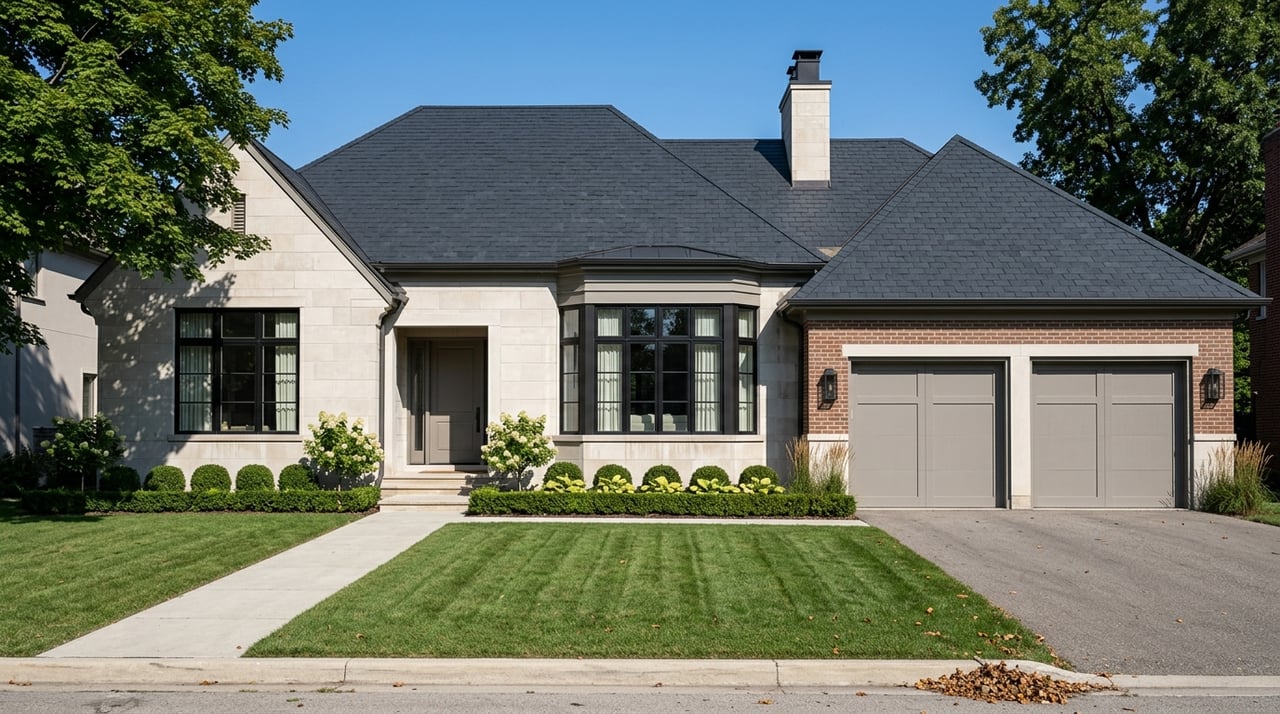
If you are selling a home in Glenview right now, you are stepping into a market that can reward the right strategy and punish the wrong one. Buyers are active, many homes still draw strong interest, and yet not every property moves at the same pace or earns the same kind of offers. The good news is that with smart pricing, thoughtful preparation, and clear positioning, you can put your home in a stronger place from day one. Let’s dive in.
Glenview is still a competitive market by the numbers, but the headline stats only tell part of the story. In May 2026, Redfin reported a median sale price of $811,015, a median 35 days on market, about 4 offers per home, and a 102.7% sale-to-list ratio. It also found that 55.0% of homes sold above list price.
That sounds strong, and it is. But if you are selling, the bigger takeaway is that competitive does not mean automatic. Buyers are still comparing value carefully, and your result will depend on your home type, condition, pricing, and location within Glenview.
One of the clearest signals in Glenview right now is the gap between detached and attached housing. MRED’s May 2026 data showed detached homes at a median sale price of $955,000 with 28 average market days and 102.6% of original list price received. Attached homes were at a $475,000 median sale price, 42 average market days, and 98.4% of original list price received.
That means your pricing strategy should start with the right category. A single-family home should be judged against similar detached sales, while a condo or townhome should be compared to attached sales. Mixing those comp sets can create a price that looks good on paper but does not hold up when buyers start comparing options.
Inventory also tightened in both segments. Detached inventory dropped to 34 homes from 66 a year earlier, while attached inventory fell to 24 from 33. Lower inventory can help sellers, but it does not replace the need for precision.
If your home is in The Glen, citywide averages are not enough. Redfin’s numbers for The Glen over the three months ending May 2026 showed a median sale price of $744,749, 38 median days on market, 3 offers on average, and a 101.7% sale-to-list ratio. At the same time, 62.4% of homes sold above list price.
Those numbers show a market that is still competitive, but not identical to Glenview overall. The Glen has its own pricing patterns and pace, so neighborhood-specific comps matter more there than broad city averages. If you price a Glen home using only wider Glenview data, you may miss the mark in either direction.
The Village of Glenview describes The Glen as a redevelopment of the former Glenview Naval Air Station into a mixed-use district with about 5,500 residents and nearly 1.9 million square feet of retail, restaurant, hotel, and office space. That context helps explain why buyers may evaluate homes there through a slightly different lens than they would in other parts of Glenview.
A strong sale often starts with a realistic launch price, not an aspirational one. Pricing should reflect your home’s size, location, amenities, condition, and current market conditions, while also considering recent sold comps, active competition, and under-contract properties.
In a competitive market, it is tempting to push the asking price and hope momentum carries the listing higher. Sometimes that works, but overpricing can also backfire fast. Recent Realtor.com research found that the first four weeks after a home hits the market are the make-or-break window, and pricing too high can lead to later concessions or price cuts.
That early period matters because your home gets its strongest burst of attention right after launch. If buyers see it as overpriced, they may move on before you have a chance to correct course. In many cases, the best pricing strategy is the one that creates urgency instead of resistance.
Once pricing is set, presentation becomes the next major lever. Buyers in Glenview can often compare multiple homes quickly, so the visual impression of your property matters from the first photo to the final showing.
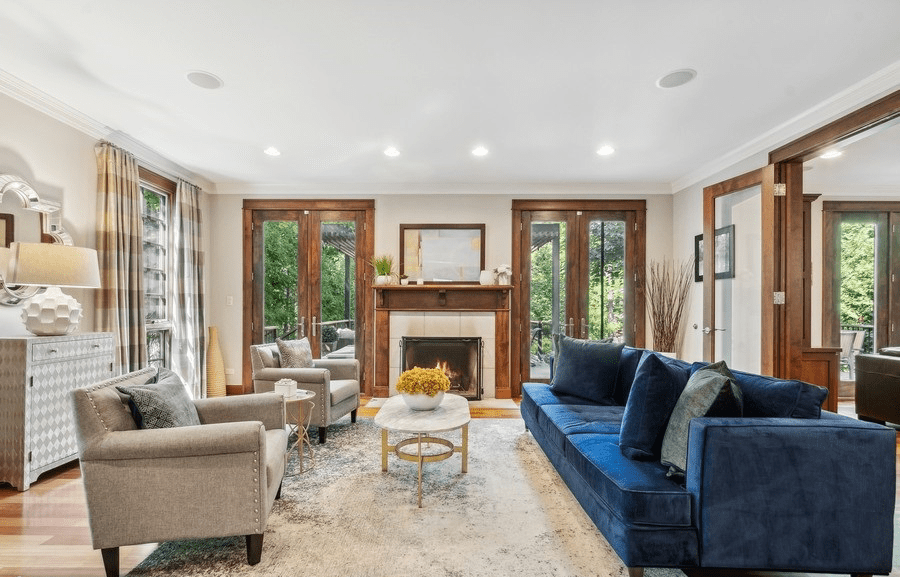
According to the National Association of Realtors’ 2025 staging report, 29% of agents said staging increased the dollar value offered by 1% to 10%, and 49% said staging reduced time on market. Buyers’ agents also said staging helped buyers envision the property as a future home.
The most common and practical preparation steps are often the simplest:
NAR’s report also found that the living room, primary bedroom, and kitchen were especially important rooms to stage. If you are deciding where to focus your time and budget, start there.
Some prep items are cosmetic, while others affect buyer confidence more directly. Realtor.com’s seller guidance notes that defects involving major systems should be fixed before listing, and that cosmetic improvements such as repainting and landscaping can also improve appeal.
Why does this matter in Glenview? Because when buyers are comparing several homes in a competitive market, visible problems can shift their attention from your home’s strengths to its future cost. Even when a buyer is still interested, deferred maintenance often shows up later in the form of tougher negotiations or requests for concessions.
In other words, small issues rarely stay small once your home is under a microscope. A smoother pre-listing process can help protect both your price and your timeline.
If you plan to do exterior work before listing, timing matters. The Village of Glenview’s Development Center is the first point of contact for permits, inspections, and contractor registration, and the village notes that permits are needed for many additions, remodels, decks, fences, roofing, solar panels, and other site changes.
Interior painting and ordinary landscaping generally do not require a permit, but visible exterior upgrades may. If a project could affect your listing schedule, it is worth checking requirements before you begin. That simple step can help you avoid delays right when you want to bring your home to market.
Many sellers assume they need to wait for the perfect week in spring. There is some truth to seasonal momentum, and Realtor.com’s 2026 report identified the week of April 12 to 18 as the national best time to sell. But the same report also noted that spring brings more competing listings and that local conditions, mortgage rates, and home condition still matter.
That is why readiness should guide your timing more than the calendar alone. A home that is priced well and presented well can perform strongly outside the peak window. An unprepared home can struggle even when buyer traffic is high.
If you are deciding when to list, ask a practical question: is your home ready to make a strong first impression right now? If the answer is yes, that may matter more than chasing a specific week.
Every Glenview home has a different value story. In The Glen, buyers may respond strongly to the area’s mixed-use setting, commuter access, and convenience. Glenview also notes two commuter train stations with adjacent commuter parking, which keeps transit access part of the broader local conversation.
In other parts of Glenview, buyers may focus more on lot size, layout, updates, street presence, or how the home compares with nearby detached properties. The point is not to oversell a lifestyle. The point is to identify the features your likely buyer will notice first and make sure your pricing, presentation, and marketing all support that story.
That kind of positioning works best when it is specific. Broad marketing language tends to blend in, while clear and factual positioning helps buyers understand why your home stands out.
Selling well in a competitive market is rarely about one decision. It is usually the result of several smart decisions made in sequence: pricing, prep, photography, launch timing, showing management, negotiation, and contract-to-close coordination.
That kind of structure matters because momentum is easier to build than rebuild. NAR’s 2025 buyer-and-seller profile found that 91% of sellers used a real estate agent, and the top reasons included marketing the home, pricing it competitively, and selling within a specific timeframe. Only 5% of homes sold as for-sale-by-owner.
For many sellers, especially in a market like Glenview, a team-based approach can help keep every part of the process moving in the same direction. When strategy, presentation, and execution are aligned, you are in a better position to attract serious buyers and negotiate from strength.
Glenview is still competitive, but the market is not one-size-fits-all. Detached and attached homes are performing differently, The Glen has its own rhythm, and buyers are paying close attention to value in the first few weeks of a listing.
If you want the strongest result, focus on the pieces you can control. Price from the right comps, prepare the home carefully, check permit needs before major visible updates, and launch only when the property is ready to compete. In this market, thoughtful execution can make a meaningful difference.
If you are thinking about selling in Glenview and want a tailored strategy for your home, The Wexler Gault Group can help you evaluate pricing, preparation, marketing, and timing with a clear local plan.
CONTACT THE WEXLER GAULT GROUP
THE WEXLER GAULT GROUP
1741 2nd Street Highland Park, IL 60035