Trying to make sense of the different home styles you’ll see in Wilmette? You’re not alone. From classic Colonials and storybook Tudors to compact Capes and sleek newer builds, each style offers a distinct feel along with practical tradeoffs. In this guide, you’ll learn how to spot each style, what layouts to expect, common renovation considerations, and how to choose the right fit for your lifestyle and budget. Let’s dive in.
Wilmette housing at a glance
Wilmette’s neighborhoods include many early and mid‑20th century homes alongside mid‑century and contemporary infill. You’ll commonly see Colonial Revival, Tudor Revival, and Cape Cod homes, plus ranches, bungalows, and custom new construction. Older areas often include alleys, detached garages, full basements, and more compartmentalized rooms.
Newer builds tend to feature open plans, attached garages, and modern mechanical systems. As you compare homes, consider how architectural character, floor‑plan flow, energy performance, and potential renovation scope align with your needs.
Colonial Revival basics
How to spot it
- Symmetrical front, a centered entry with a pediment or small porch.
- Multi‑pane double‑hung windows and a gabled roof.
- Brick or clapboard siding that emphasizes classic rhythm and proportion.
Typical layout
- Center‑hall or side‑hall plan with defined living and dining rooms.
- Bedrooms usually on the second floor.
- Formal, separated rooms rather than a wide open plan.
Renovation watch‑outs
- Opening the kitchen to living areas often involves altering load‑bearing walls, which can add complexity.
- Original trim and millwork are part of the charm. Preserving or replicating these details can be more costly.
- Windows may be older single‑pane wood units. Energy‑efficient replacements should balance performance with historic appearance.
Good buyer fit
- You value classic symmetry and defined spaces such as a formal dining room or a quiet office.
- You may be open to renovating for a more connected kitchen and family area while keeping character intact.
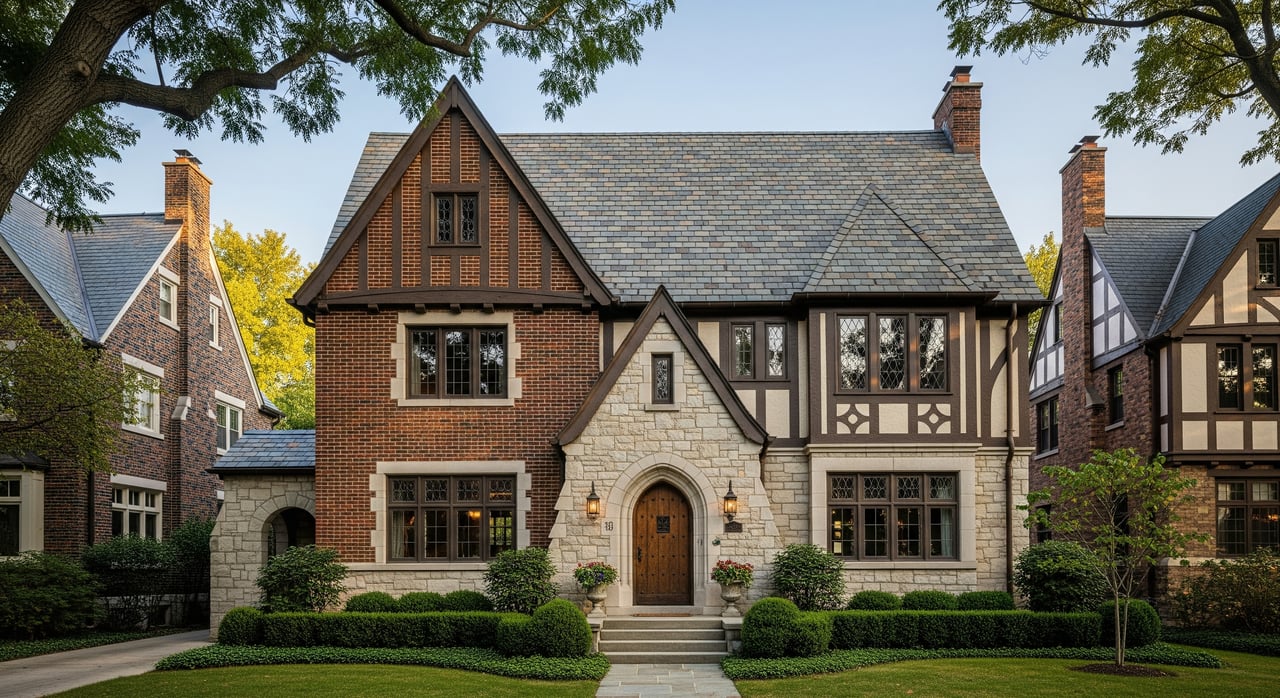
Tudor Revival basics
How to spot it
- Steep roofs and cross gables, often with half‑timbering or decorative timber accents.
- Masonry or rough stucco exteriors, tall narrow windows, and arched doorways.
- Large masonry fireplaces and detailed craftsmanship.
Typical layout
- Asymmetrical floor plans with cozy, smaller rooms and occasional level changes.
- Built‑ins and distinctive wood details.
Renovation watch‑outs
- Complex rooflines and masonry can raise the cost of additions and roof work.
- Heavy chimneys and stonework may limit simple expansions without careful design.
- Preserving leaded glass, beams, and other details supports resale but may add cost.
Good buyer fit
- You’re drawn to storybook character and craftsmanship.
- You prefer intimate rooms and are less focused on a one‑level or highly open layout.
Cape Cod basics
How to spot it
- Compact 1 to 1.5 story form with a central door.
- Steep roof, dormers, and simple siding.
- Balanced, modest façade.
Typical layout
- Smaller rooms with efficient footprints.
- Bedrooms often located upstairs within dormer space.
- Kitchens may be modest in older examples.
Renovation watch‑outs
- Adding rear space or enlarging dormers is a common and practical way to gain area.
- Roof structure and insulation deserve careful attention during expansion.
- Basements are often used for mechanical upgrades and storage.
Good buyer fit
- You want a smaller, cozier home or a starter with room to grow.
- You plan to expand upward or toward the rear instead of fully reconfiguring the main level.
Newer builds and infill
How to spot it
- Varied styles including ranch, split‑level, contemporary box forms, and custom façades.
- Attached two‑car garages are common, often front‑facing on infill sites.
Typical layout
- Open‑plan living with large kitchens and en‑suite primary bedrooms.
- Integrated mudrooms, higher ceilings, and modern mechanical systems.
Renovation watch‑outs
- Fewer near‑term mechanical upgrades are typically needed.
- Infill lots may offer smaller yards and younger landscaping compared with older blocks.
Good buyer fit
- You prioritize modern flow, convenience, and lower short‑term maintenance.
- You want easier paths to accessibility and energy‑efficiency upgrades.
Renovation and inspection priorities
Structure, roof, and envelope
- Older roofs may be nearing replacement. Complex Tudor roof geometry can increase cost.
- Masonry walls and chimneys often need tuckpointing and careful water management.
- Historic siding and trim are worth preserving where possible, though repairs can be more costly.
Foundation and basements
- Full basements are common. Look for water intrusion, sump systems, and cracks.
- Many buyers plan basement waterproofing and finishing. Check grading and downspouts outside.
Mechanical systems
- Electrical: some older homes have 100A service or legacy wiring that limits today’s loads.
- Plumbing: note galvanized pipes or outdated materials that may need replacement.
- Heating and cooling: verify age and capacity, and whether central air and ducting are present.
Hazardous materials and environmental
- Pre‑1978 homes may have lead paint. Asbestos may be present in insulation or some finishes.
- Radon testing is a prudent step in basements in Cook County.
Historic preservation and permits
- Some areas fall under preservation or conservation oversight. Exterior changes visible from the street may need review.
- Plan for building permits and possible design review. Timelines can add weeks or months depending on scope.
Energy efficiency
- Older walls may lack insulation. Air sealing, targeted insulation, and window upgrades can be very effective.
- Newer homes usually perform better but still confirm insulation levels and HVAC efficiency.
Site, grading, and drainage
- Mature trees are assets but roots can affect foundations and utilities.
- Ensure yard slopes and drainage do not drive water toward the house.
Accessibility and layout changes
- Converting closed plans to open layouts or adding a main‑floor suite often requires structural work and rerouting mechanicals.
- Accessory units or in‑law suites can be limited by zoning. Confirm rules early.
Lots, garages, and parking
- Older Wilmette blocks often have alleys with rear detached garages. This preserves the streetscape and walkability.
- Detached garages may be single or one‑and‑a‑half car. Replacing or widening to a true two‑car can be common.
- Newer homes and some infill include attached front or side garages. These add convenience but can reduce front yard or porch areas.
- Corner lots or parcels without alley access usually have a side driveway. If converting or relocating a garage, check setbacks and lot coverage.
- Additions and garage work are governed by setbacks, zoning, and lot coverage. Verify what is permissible before drawing up plans.
Match style to your lifestyle
Use this quick checklist as you compare homes:
Lifestyle and layout
- Do you prefer distinct rooms and original millwork or an open plan with a large kitchen?
- How important are commute options, parks, and lake access for your routine? Styles may cluster by block and era.
Renovation appetite
- Are you comfortable with cosmetic updates or ready for structural work like removing walls or adding dormers?
Maintenance tolerance
- Character homes often need ongoing masonry, trim, and window care. Newer homes typically have fewer near‑term projects.
Parking and storage
- Do you need a true two‑car garage or EV charging? Confirm garage size, alley or curb access, and room to expand.
Mechanical readiness
- Check electrical service, HVAC age and type, water heater condition, and whether central AC is installed.
Basement and site risk
- Look for moisture, sump systems, signs of past flooding, and proper exterior grading.
Permits and preservation
- If the home sits in a conservation or historic area, ask about design review for visible exterior changes.
Resale expectations
- Well‑maintained character homes can command premiums, while highly specific styles may narrow the buyer pool compared with neutral, modern interiors.
Planning next steps
A smart next step is to align your target style with your renovation tolerance, timing, and budget. If you anticipate an addition or exterior changes, speak with local officials and experienced contractors early so you understand permitting, review steps, and realistic timelines. Explore financing options for renovations if needed, including products that combine purchase and improvement costs.
When you are ready to tour homes or want a second opinion on fit and feasibility, connect with a local team that understands Wilmette’s housing stock, garages and lot patterns, and renovation norms. If you would like tailored guidance and a curated search, reach out to the The Wexler Gault Group for a conversation.
FAQs
Which Wilmette home style is easiest to modernize?
- Newer builds are typically easiest due to compatible open plans and updated systems, while Capes and some Colonials are often straightforward to expand with rear additions or dormers.
Do Tudors or Colonials cost more to maintain than newer homes?
- Generally yes, since complex roofs, masonry work, historic windows, and older mechanicals can increase maintenance and renovation costs compared with newer construction.
Are there special historic rules in parts of Wilmette?
- Yes, certain areas have preservation or conservation oversight, and exterior changes visible from public ways may require review and approvals.
Can I add a garage or convert one into living space in Wilmette?
- Often possible, but subject to zoning, setbacks, lot coverage, and any applicable design review; alley access or lot constraints can affect feasibility.
What inspections are most important for older Wilmette homes?
- A full home inspection plus structural and foundation checks, a sewer scope if applicable, radon testing for basements, and screening for lead paint or asbestos in older properties.
How can I improve energy efficiency in an older Wilmette house?
- Target air sealing and insulation in walls and attic, upgrade windows as appropriate, and confirm HVAC efficiency to gain comfort and lower utility costs.